

LNG vs Natural Gas: Prices, Uses and Global Market Differences
Understand LNG vs natural gas, including pricing differences, Henry Hub, TTF, JKM benchmarks, transportation costs, uses and global energy markets.
Natural gas and liquefied natural gas (LNG) are closely connected energy resources, but their prices, transportation methods, commercial uses and global market dynamics are not the same. Understanding these differences is essential for energy consumers, investors, policymakers, traders and businesses that depend on reliable fuel supplies.
Natural gas plays an important role in electricity generation, industrial production, residential heating and commercial energy consumption. However, natural gas reserves are not distributed evenly around the world. Countries with abundant domestic production may enjoy relatively competitive prices, while nations that depend on imported LNG can face additional transportation costs and international market risks.
This is where LNG becomes particularly important.
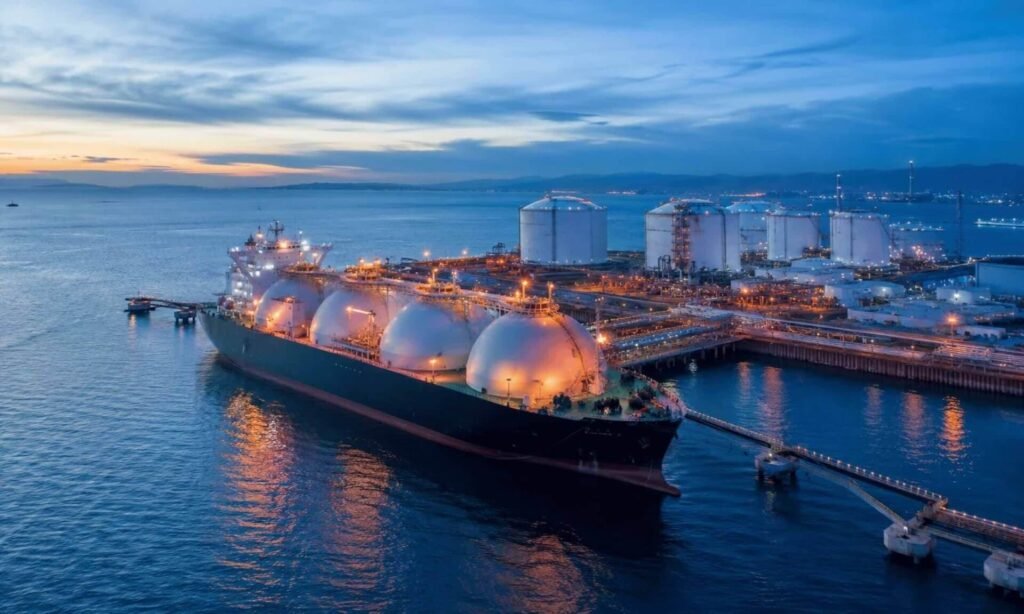
By cooling natural gas to approximately -162°C, producers transform it into a liquid that occupies roughly 1/600th of its original gaseous volume. This makes it possible to transport natural gas across oceans using specialised LNG carriers rather than relying exclusively on pipelines.
The development of LNG infrastructure has transformed the global energy industry. Countries that previously had limited access to pipeline gas can now purchase supplies from international exporters, including the United States, Qatar and Australia.
However, international trade also creates new pricing relationships. Natural gas prices in the United States, Europe and Asia can move in different directions because of regional supply conditions, infrastructure availability, contract structures and geopolitical developments.
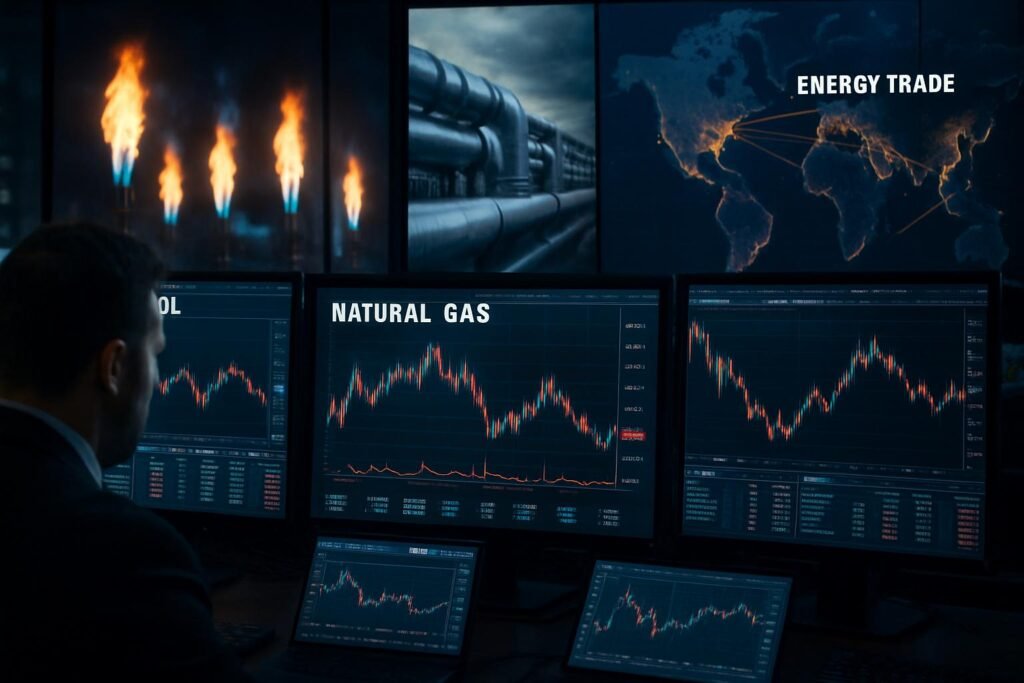
For example, US natural gas prices are closely associated with the Henry Hub benchmark, European markets commonly follow the Dutch Title Transfer Facility (TTF), and Asian LNG markets use the Japan Korea Marker (JKM) as an important reference price.
So, why can LNG cost more than domestic natural gas? How are international LNG prices determined? Are natural gas and LNG used for different purposes? And what causes gas prices to fluctuate between countries?
This guide explores the differences between natural gas and LNG, explains their pricing mechanisms, examines international market benchmarks and discusses the economic factors influencing the global gas industry.
1. Natural Gas vs LNG: Understanding the Differences, Production and Uses
What is natural gas?
Natural gas is a naturally occurring fossil fuel found beneath the Earth’s surface, often in underground reservoirs alongside crude oil or in independent gas formations.
It consists primarily of methane (CH4), although its exact composition varies depending on the geological formation and production location. Smaller quantities of ethane, propane, butane, carbon dioxide, nitrogen and other compounds may also be present.
After extraction, natural gas undergoes processing to remove unwanted impurities, water and other components that could affect its quality, safety or transportation.
The processed gas can then enter pipeline networks and travel directly to power plants, factories, commercial facilities and residential consumers.
Natural gas is widely used because it offers several practical advantages:
-
Electricity generation through gas-fired power plants.
-
Industrial heating and manufacturing processes.
-
Residential cooking and space heating.
-
Commercial heating and hot-water systems.
-
Fertiliser production, particularly ammonia manufacturing.
-
Petrochemical production and other chemical processes.
-
Certain transportation applications, including compressed natural gas (CNG).
Its importance extends beyond electricity and heating. Industries such as steel, glass, cement, chemicals and fertilisers rely on natural gas either as an energy source or as an industrial feedstock.
What is liquefied natural gas (LNG)?
Liquefied natural gas, commonly called LNG, is natural gas that has been cooled to approximately -162°C under atmospheric pressure to convert it into liquid form.
The liquefaction process dramatically reduces its volume, making long-distance transportation much more practical.
Unlike pipeline natural gas, which travels through interconnected networks in gaseous form, LNG is transported using specialised cryogenic vessels designed to maintain extremely low temperatures.
The LNG supply chain generally involves five major stages:
-
Natural gas extraction: Gas is produced from underground reservoirs.
-
Gas processing: Water, carbon dioxide, sulphur compounds and other unwanted components are removed.
-
Liquefaction: The processed gas is cooled until it becomes liquid.
-
LNG transportation: Specialised carriers transport the liquid fuel to importing countries.
-
Regasification: LNG is warmed at an import terminal and converted back into gaseous natural gas.
After regasification, the gas can enter local pipeline networks and reach industrial facilities, power stations and other consumers.
<IMAGE PROMPT: LNG liquefaction plant and LNG carrier terminal>
Natural gas vs LNG: Key differences
Although LNG and natural gas contain essentially the same primary fuel, their physical forms and commercial supply chains differ.
| Comparison | Natural Gas | LNG |
|---|---|---|
| Physical state | Gas | Liquid |
| Main component | Methane | Primarily methane |
| Temperature | Ambient or pipeline conditions | Approximately -162°C |
| Transportation | Pipelines | Specialised LNG carriers |
| Storage | Underground storage and pressurised facilities | Cryogenic storage tanks |
| International trade | Primarily pipeline-based | Ship-based international trade |
| Processing | Treatment and purification | Treatment followed by liquefaction |
| Additional costs | Pipeline transportation and distribution | Liquefaction, shipping and regasification |
| Main advantage | Efficient regional distribution | Long-distance international transportation |
One important distinction is that LNG is not a different type of fuel from natural gas. It is simply natural gas in a liquid state.
The chemical energy remains largely the same, although processing, composition and measurement conditions can influence the energy content of a particular shipment.
Why is natural gas converted into LNG?
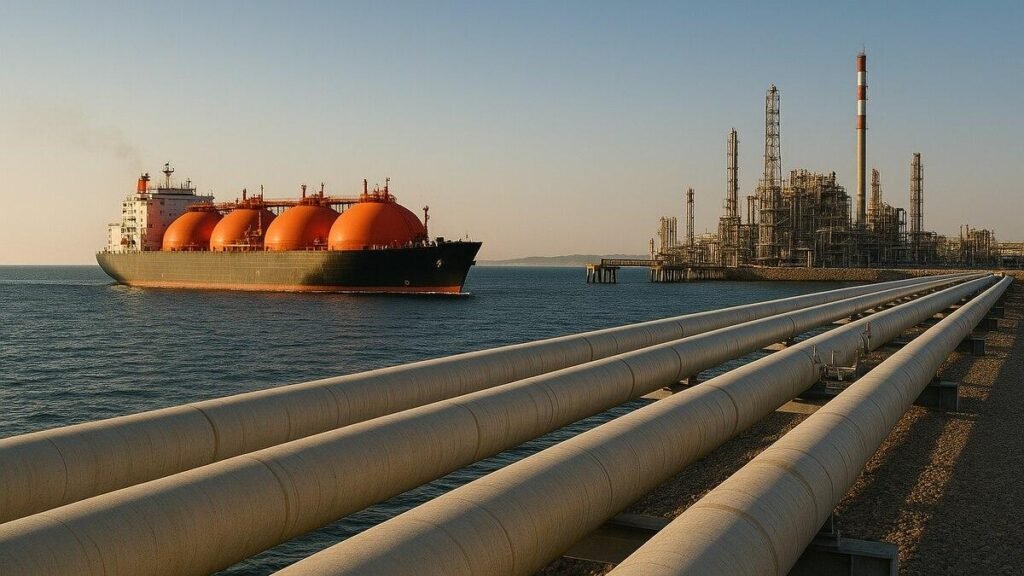
Pipelines are an effective way to transport large volumes of natural gas over land. However, they become difficult and expensive to build across oceans, politically sensitive borders or geographically challenging regions.
LNG provides an alternative.
For example, a natural gas producer in the United States can liquefy its production, load it onto a specialised carrier and transport it to an importer in Japan, China or Europe.
This flexibility has helped create a more interconnected international gas market.
LNG also gives importing countries an opportunity to diversify their suppliers. Instead of depending entirely on one neighbouring country or pipeline route, buyers can source cargoes from multiple exporting regions.
However, LNG transportation is not free. The liquefaction plant, specialised vessels, shipping route, insurance, import terminal and regasification process all contribute to the final delivered price.
Major applications of natural gas and LNG
Natural gas and LNG ultimately serve many of the same energy needs.
Electricity generation: Gas-fired power plants use natural gas to produce electricity. LNG imports can support countries where domestic gas production is insufficient.
Industrial manufacturing: Natural gas provides process heat and serves as a feedstock in industries such as chemicals, fertilisers and petrochemicals.
Residential consumption: After distribution through local networks, gas supports cooking, heating and hot-water applications.
Commercial applications: Hotels, hospitals, restaurants and other commercial facilities use natural gas for heating, cooking and industrial-scale equipment.
Transportation: Natural gas can be used as CNG or LNG in selected vehicle and shipping applications. LNG is particularly relevant where higher energy density is beneficial for heavy-duty transport.
The final consumer generally uses regasified LNG in the same way as pipeline natural gas. The main differences occur before the fuel reaches the customer.
2. Natural Gas and LNG Pricing Mechanisms: Why Prices Differ Around the World
One of the biggest misconceptions about the gas industry is that natural gas has one universal international price.
Unlike crude oil, which is traded in a highly interconnected global market, natural gas pricing has historically been more regional because transporting gas requires extensive pipeline infrastructure or expensive LNG supply chains.
The development of LNG has increased international market integration, but regional pricing differences remain significant.
How are natural gas prices determined?
The price of natural gas depends on a combination of supply, demand, transportation availability, contract arrangements and market conditions.
Several important factors influence price formation.
Production costs and availability: Countries with substantial domestic reserves and efficient production infrastructure may have relatively competitive gas supplies.
Consumption patterns: Industrial activity, electricity generation, residential heating and cooling demand influence how much gas a market needs.
Storage levels: Underground storage helps balance seasonal demand. Low storage levels can increase competition for available supplies.
Weather conditions: Cold winters can increase heating demand, while hot summers can increase gas consumption for electricity generation and air conditioning.
Transportation infrastructure: Pipeline capacity, LNG terminal availability and shipping constraints determine how easily gas can reach consumers.
Government regulations: Taxes, price controls, subsidies, market liberalisation and import policies can influence the price paid by consumers.
These factors explain why two countries purchasing natural gas at the same time can experience substantially different prices.
Regional gas price benchmarks: Henry Hub, European TTF and Asian LNG prices
Gas market participants use regional benchmarks to understand market conditions, negotiate contracts and manage financial exposure.
Three particularly important reference prices are Henry Hub, TTF and JKM.
1. Henry Hub: The US natural gas benchmark
Henry Hub is a major natural gas trading and delivery point located in Louisiana, United States.
It serves as the principal reference benchmark for US natural gas futures traded on the New York Mercantile Exchange (NYMEX).
Henry Hub prices are influenced by:
-
US natural gas production.
-
Domestic electricity generation.
-
Industrial gas consumption.
-
Residential heating demand.
-
Underground storage inventories.
-
Pipeline transportation capacity.
-
LNG export demand.
The United States has a large domestic pipeline network and substantial natural gas production. Consequently, domestic supply and demand conditions play a major role in determining Henry Hub prices.
For example, strong winter heating demand can increase US gas prices, while higher production and comfortable storage inventories can place downward pressure on the market.
Henry Hub is also important internationally because several US LNG export contracts use US gas prices as their underlying reference index.
2. European TTF: The European natural gas benchmark
The Dutch Title Transfer Facility, commonly known as TTF, is one of Europe’s most important natural gas trading hubs.
It provides a reference price for wholesale natural gas across much of the European market.
TTF prices respond to several factors:
-
European natural gas consumption.
-
LNG import availability.
-
Pipeline imports.
-
Underground storage inventories.
-
Weather forecasts.
-
Electricity generation requirements.
-
Geopolitical developments.
-
Competition between European and Asian LNG buyers.
Europe has historically received natural gas through extensive pipeline networks. However, changes in Russian pipeline deliveries and the expansion of LNG imports have increased the importance of internationally traded LNG.
When European storage inventories are low or LNG supply becomes restricted, TTF prices may rise as buyers compete for available supplies.
3. JKM: The Asian LNG benchmark
The Japan Korea Marker, commonly called JKM, is an important benchmark for spot LNG prices in Northeast Asia.
It reflects the assessed market value of LNG cargoes delivered to destinations including Japan, South Korea, China and Taiwan.
JKM is particularly important because many Asian economies depend on imported LNG to support electricity generation, industrial production and residential consumption.
Its pricing is influenced by:
-
Chinese LNG import demand.
-
Japanese electricity consumption.
-
South Korean seasonal demand.
-
LNG availability from Qatar and Australia.
-
Shipping costs and vessel availability.
-
Competition with European buyers.
-
Weather-related consumption patterns.
Asian LNG prices can increase rapidly when several major importers compete for a limited number of available cargoes.
Henry Hub vs TTF vs JKM: A comparison
| Feature | Henry Hub | European TTF | Asian JKM |
|---|---|---|---|
| Main market | United States | Europe | Northeast Asia |
| Primary reference | Domestic natural gas | European wholesale gas | Delivered LNG |
| Market structure | Hub-based | Hub-based | LNG cargo assessment |
| Important demand drivers | Heating, power, industry, exports | Heating, power, industry, storage | Power, industry, seasonal imports |
| Major supply influences | US production and pipelines | Pipeline imports and LNG | LNG exporters and shipping |
| Common pricing unit | USD/MMBtu | EUR/MWh or USD/MMBtu | USD/MMBtu |
These benchmarks should not be compared without considering their different delivery locations, units and commercial conditions.
A US Henry Hub price, for example, does not represent the final cost of delivering LNG to a European or Asian buyer.
The importer must also consider liquefaction charges, shipping expenses, insurance, terminal costs and other contractual components.
LNG spot market pricing vs long-term LNG contracts
International LNG transactions generally take place through two broad commercial arrangements: spot or short-term trading and long-term supply contracts.
Spot LNG pricing
Spot LNG refers to cargoes purchased for relatively prompt delivery rather than under a traditional long-term supply commitment.
Spot prices respond more directly to current market conditions.
For example, if an unusually cold winter increases demand in Japan and South Korea, buyers may compete for additional cargoes. This competition can push spot prices higher.
Spot LNG purchases offer flexibility, allowing importers to respond to changing consumption requirements.
However, they also expose buyers to greater short-term price volatility.
Long-term LNG contracts
Long-term LNG contracts provide buyers with a more predictable supply arrangement over several years.
These contracts are particularly important for countries and utilities that require reliable energy supplies and want to support investment in expensive LNG infrastructure.
Contract structures can include:
-
Oil-indexed pricing.
-
Henry Hub-linked pricing.
-
Gas hub-linked pricing.
-
Fixed or hybrid pricing arrangements.
-
Take-or-pay commitments.
-
Destination and cargo flexibility provisions.
A long-term contract may reduce exposure to sudden spot market movements, but it does not automatically guarantee the lowest price.
Its commercial attractiveness depends on the indexation formula, contract duration, minimum purchase commitments and market conditions.
For example, a buyer with a long-term oil-indexed contract may benefit when oil prices decline, but could face higher gas costs when oil prices increase.
Gas-on-gas pricing vs oil-indexed gas pricing
Gas-on-gas pricing is a mechanism in which natural gas prices are determined primarily by competition between gas buyers and sellers.
The price reflects the availability of gas, consumption requirements and trading activity at a particular market hub.
Henry Hub and TTF are important examples of gas trading benchmarks.
Oil-indexed pricing, on the other hand, links the price of natural gas or LNG to the price of crude oil or a petroleum product.
This arrangement developed partly because oil was historically a competing fuel in several industrial and power generation markets.
In an oil-indexed contract, the LNG price may be calculated using a formula that includes:
-
A crude oil reference price.
-
An agreed slope or percentage.
-
A fixed contractual constant.
-
A price review mechanism.
-
Contract-specific adjustment provisions.
The precise formula differs between agreements.
Which pricing mechanism is better?
There is no universal answer.
Gas-on-gas pricing can provide greater transparency about actual gas market conditions, especially where trading hubs are liquid and competitive.
Oil-indexed pricing can provide a familiar contractual structure and may be attractive to buyers seeking diversified pricing exposure.
The most suitable mechanism depends on the buyer’s market, supply security requirements, negotiating position and risk management strategy.
3. LNG Liquefaction, Shipping and Regasification: Understanding the Cost Structure
Understanding why LNG can be more expensive than domestically produced natural gas requires examining its complete supply chain.
The international LNG business involves several capital-intensive processes, each of which contributes to the final delivered price.
LNG liquefaction costs
Liquefaction is the process of cooling processed natural gas until it becomes a liquid.
It takes place at specialised export facilities equipped with large industrial refrigeration systems.
Building and operating an LNG liquefaction facility requires substantial investment in:
-
Gas processing equipment.
-
Refrigeration systems.
-
Storage tanks.
-
Loading terminals.
-
Marine infrastructure.
-
Electricity and fuel supplies.
-
Safety and environmental protection systems.
The cost of liquefaction depends on plant efficiency, construction costs, financing arrangements, utilisation rates and the commercial structure of the project.
Some LNG supply agreements include fixed liquefaction charges, while others incorporate the cost through a broader pricing formula.
This distinction matters when comparing US LNG exports with supplies from countries that use different commercial arrangements.
LNG shipping costs
After liquefaction, LNG must be transported using specially designed carriers.
These vessels contain insulated cryogenic storage tanks that maintain the cargo at extremely low temperatures.
Shipping costs depend on several variables:
-
Distance between export and import terminals.
-
LNG carrier availability.
-
Vessel charter rates.
-
Fuel consumption.
-
Shipping route conditions.
-
Port charges.
-
Insurance premiums.
-
Canal transit requirements.
-
Maritime security risks.
For instance, transporting LNG from Qatar to India involves a different shipping distance and route structure compared with delivering LNG from the US Gulf Coast to Europe.
A longer route generally increases transportation time and vessel requirements, although actual freight costs depend on market conditions and vessel efficiency.
Shipping disruptions can also affect LNG availability. When important maritime routes become inaccessible or unsafe, vessels may need to follow alternative routes, increasing journey times and transportation expenses.
LNG regasification costs
When an LNG carrier reaches an importing country, the cargo is transferred into specialised storage facilities.
The LNG is then warmed through a regasification process to convert it back into gaseous natural gas.
The resulting gas is delivered into pipeline networks or other local distribution systems.
Regasification facilities require:
-
Cryogenic LNG storage tanks.
-
Vaporisation equipment.
-
Gas handling systems.
-
Safety installations.
-
Pipeline connections.
-
Loading and unloading infrastructure.
Import terminals can be land-based or floating.
Floating Storage and Regasification Units (FSRUs) provide an alternative to conventional onshore facilities. These specialised vessels can store LNG and convert it back into gas, potentially reducing the time required to establish import capacity.
However, floating infrastructure also involves chartering, operational and connection costs.
Pipeline gas transportation vs LNG shipping infrastructure
Pipeline transportation and LNG shipping are two different approaches to moving natural gas between producers and consumers.
Pipeline systems transport gas continuously through interconnected networks.
LNG shipping involves converting gas into liquid form, transporting it by sea and converting it back into gas at the destination.
| Factor | Pipeline Gas | LNG Shipping |
|---|---|---|
| Transportation method | High-pressure pipelines | Cryogenic vessels |
| Infrastructure | Pipelines and compressor stations | Liquefaction plants, carriers and import terminals |
| Geographic flexibility | Limited by pipeline routes | Greater international reach |
| Initial investment | Often very high | High across multiple supply-chain stages |
| Delivery pattern | Continuous flows | Individual cargo shipments |
| Main cost drivers | Distance, capacity and compression | Liquefaction, freight and regasification |
| Supply flexibility | Depends on network connectivity | Depends on cargo availability and contractual flexibility |
Pipeline gas can be highly competitive when producers and consumers are geographically connected.
However, pipelines can create long-term commercial dependencies between exporting and importing countries.
LNG provides more geographical flexibility, allowing cargoes to move between markets when commercial conditions justify the change.
What determines the final delivered price of LNG?
The final delivered LNG price is not necessarily equal to the price quoted at the export terminal or the underlying gas benchmark.
A simplified delivered-price calculation can include:
-
Natural gas feedstock cost.
-
Liquefaction charge.
-
Shipping and freight expenses.
-
Insurance and port charges.
-
Regasification fees.
-
Applicable taxes and other contractual costs.
For example, consider a hypothetical LNG purchase linked to Henry Hub.
A buyer may pay a formula-based price for the gas feedstock, plus liquefaction and transportation expenses.
Even if Henry Hub prices remain unchanged, an increase in shipping rates or liquefaction costs could increase the buyer’s delivered cost.
Similarly, a European buyer may find that purchasing a cargo from an alternative supplier is commercially attractive if the delivered price is lower than competing options.
This is why international LNG trading frequently involves comparing delivered costs rather than looking at a single headline benchmark.
<IMAGE PROMPT: LNG global supply chain infographic showing gas extraction, liquefaction, shipping and regasification>
4. Global Natural Gas and LNG Market Dynamics: Major Exporters, Importers and Geopolitical Risks
The international gas industry has become increasingly interconnected as LNG infrastructure expands.
Countries that once depended on regional pipeline networks can now participate in global energy trade.
However, this does not mean that natural gas has become a completely unified global commodity market.
Regional supply conditions, infrastructure limitations, geopolitical developments and contract arrangements continue to influence price formation.
Major LNG exporting countries
Several countries play important roles in international LNG supply.
United States
The United States has become one of the world’s leading LNG exporters.
Its export industry benefits from substantial domestic natural gas production, access to Gulf Coast infrastructure and the ability to purchase feed gas through domestic trading markets.
US LNG export growth has increased the connection between Henry Hub and international gas markets.
However, the final LNG price also depends on liquefaction capacity, shipping expenses and destination-market demand.
Qatar
Qatar is one of the most important LNG exporters globally.
Its extensive natural gas resources and large LNG production facilities have established it as a major supplier to Asian and European buyers.
Qatar’s geographical position makes maritime security and access to important shipping routes particularly relevant to its export operations.
Australia
Australia is another major LNG supplier.
Its export facilities serve important Asian markets, including Japan, China and South Korea.
The country’s position in the Asia-Pacific region gives it a significant role in regional LNG supply and competition.
Other important LNG exporters include Malaysia, Russia, Nigeria, Oman and several emerging African producers.
Major LNG importing countries and regions
Demand for LNG is influenced by economic growth, domestic production, industrial activity and electricity consumption.
China
China is one of the most influential natural gas and LNG markets.
Its demand is driven by industrial manufacturing, urban consumption, electricity generation and policies aimed at diversifying its energy supply.
China can source gas from domestic production, international pipelines and LNG imports.
This combination gives it multiple supply options and influences its purchasing strategy.
Japan
Japan has limited domestic natural gas production and relies heavily on imported LNG.
The fuel is particularly important for electricity generation and energy security.
Japanese buyers have historically maintained substantial long-term LNG supply relationships.
South Korea
South Korea is another major LNG importer.
Natural gas supports its power generation, industrial production and residential consumption.
The country’s import requirements can change with seasonal demand and electricity market conditions.
Europe
Europe has undergone significant changes in its gas supply structure.
Reduced dependence on Russian pipeline gas has increased the strategic importance of LNG imports.
European buyers now compete with Asian markets for internationally available cargoes, particularly during periods of tight supply.
India
India is an important emerging natural gas market.
Its demand comes from fertiliser manufacturing, city gas distribution, industrial applications, power generation and transportation.
India imports LNG to supplement domestic production.
However, high international prices can affect the economics of gas consumption, particularly for price-sensitive industrial users and electricity generators.
The country’s ability to expand natural gas consumption depends partly on affordable supply, pipeline infrastructure, terminal capacity and domestic pricing policies.
Geopolitical factors and global energy price volatility
Natural gas markets are particularly sensitive to geopolitical developments because large volumes of energy move through concentrated production regions and important transportation corridors.
Political conflicts, trade restrictions, sanctions, diplomatic disputes and maritime security concerns can affect both the availability and cost of natural gas.
Some major geopolitical risk factors include:
International sanctions: Restrictions on energy exports, financial transactions and infrastructure investment can change supply availability.
Maritime shipping disruptions: LNG carriers depend on secure sea routes. Disruptions can delay shipments, increase freight costs or reduce the volume of cargoes reaching importing countries.
Pipeline disputes: Political tensions between neighbouring countries can affect cross-border gas deliveries.
Export restrictions: Governments may prioritise domestic consumption over international sales during supply shortages.
Infrastructure damage: Damage to gas production facilities, pipelines, liquefaction plants or import terminals can remove significant volumes from the market.
Competition for cargoes: When several importing countries need additional LNG simultaneously, spot prices can increase sharply.
The importance of these risks became particularly visible during the European energy crisis of 2022, when reduced Russian pipeline deliveries and intense competition for alternative gas supplies transformed regional market conditions.
In 2026, disruptions affecting LNG flows through the Strait of Hormuz provided another example of how a major maritime chokepoint can influence international energy prices.
The International Energy Agency reported that the disruption affected a route responsible for almost 20% of global LNG supply, highlighting the vulnerability of international energy transportation networks.
How LNG reshapes global market balances
LNG has gradually connected markets that were previously more independent.
Consider a hypothetical situation in which Europe experiences a cold winter while Asian demand remains stable.
European buyers may increase their LNG purchases to refill storage facilities and support electricity generation.
If European prices become more attractive than Asian prices after accounting for transportation costs, flexible cargoes may move towards Europe.
However, if Asian demand subsequently increases and JKM rises above TTF by a sufficient margin, suppliers may redirect available cargoes towards Asia.
This process is known as cargo diversion or destination optimisation.
It demonstrates how LNG creates a commercial connection between regional markets.
The International Energy Agency noted that the correlation between European and Asian benchmark prices reached 0.955 in 2025, reflecting stronger market interconnection as destination-flexible LNG supplies expanded.
Nevertheless, price differences remain possible because transportation costs, local demand and infrastructure limitations prevent complete market integration.
What causes global natural gas prices to rise or fall?
The following factors can significantly influence international gas markets.
| Factor | Potential impact on prices |
|---|---|
| Higher natural gas production | Can reduce prices |
| Increased LNG export capacity | Can improve international supply |
| Cold winter weather | Can increase heating demand |
| Hot summer weather | Can increase electricity-related demand |
| Low storage inventories | Can increase market pressure |
| Geopolitical supply disruptions | Can increase volatility |
| Higher shipping costs | Can increase delivered LNG prices |
| Strong industrial demand | Can support higher prices |
| Increased renewable electricity generation | Can reduce gas-fired power demand |
| Pipeline infrastructure disruptions | Can restrict regional supply |
These factors rarely operate independently.
For example, a cold winter may increase gas demand at the same time that shipping disruptions restrict LNG availability. The combined impact can be much greater than either development alone.
5. The Future of Natural Gas and LNG: Market Opportunities, Challenges and Energy Transition
The future of natural gas and LNG will depend on the balance between energy security, economic growth, infrastructure investment and decarbonisation.
Although renewable energy sources are expanding, natural gas continues to play an important role in many electricity systems and industrial applications.
However, the long-term economics of the gas industry are changing.
Growing LNG export capacity
New LNG export projects are expected to influence global supply over the coming years.
The United States, Qatar and other producers are investing in production and export infrastructure to serve international markets.
Additional capacity could improve supply availability and reduce the pressure created by tight LNG markets.
However, the impact will depend on when projects become operational, their production costs and the rate at which global demand grows.
An increase in export capacity does not automatically guarantee lower prices. Strong demand growth, unexpected outages or shipping constraints can offset additional production.
Rising natural gas demand in emerging economies
Emerging economies are expected to remain important drivers of natural gas consumption.
Countries such as India and China have growing energy requirements associated with urbanisation, industrial development and electricity demand.
Natural gas can support these economies through electricity generation, fertiliser production, manufacturing and city gas distribution.
However, affordability is critical.
When international LNG prices become too high, importing countries may reduce purchases, increase domestic production, switch to alternative fuels or prioritise other energy sources.
Natural gas and renewable energy integration
Natural gas can complement renewable electricity generation in certain power systems.
Solar and wind generation depend on weather conditions and may fluctuate throughout the day.
Gas-fired power stations can provide dispatchable electricity when renewable output is insufficient, subject to plant capabilities, fuel availability and market economics.
However, this role is not guaranteed in every market.
Energy storage, demand response, grid interconnections, hydropower and other flexible technologies can also help balance electricity systems.
The long-term role of natural gas will depend on how quickly these alternatives develop and how governments approach emissions reduction.
Environmental considerations
Natural gas generally produces less carbon dioxide during combustion than coal for an equivalent amount of energy generated, although actual lifecycle emissions depend on fuel quality, efficiency and methane leakage.
Methane is a particularly important greenhouse gas because it has a much stronger warming effect than carbon dioxide over shorter time horizons.
Natural gas production, processing, pipeline transportation and LNG operations can all generate methane emissions if systems are not properly managed.
LNG also requires energy for liquefaction, transportation and regasification, which adds emissions to its supply chain.
Consequently, evaluating the environmental impact of LNG requires looking beyond emissions at the point of combustion.
Important considerations include:
-
Methane leakage during natural gas production.
-
Energy consumption during liquefaction.
-
LNG carrier fuel consumption.
-
Regasification energy requirements.
-
Pipeline and terminal operating efficiency.
-
Monitoring and reduction of methane emissions.
These issues are increasingly relevant for governments, energy companies and international buyers.
What should businesses and investors monitor?
Companies operating in the energy industry should monitor several indicators to understand changes in natural gas and LNG markets.
1. Henry Hub price movements: These help assess US domestic gas conditions and the feedstock economics of US LNG exports.
2. TTF market trends: European benchmark prices provide insight into European supply-demand balances.
3. JKM spot LNG prices: These help assess Asian LNG market conditions and competition for available cargoes.
4. Global LNG production: New liquefaction facilities and production disruptions can affect international supply.
5. LNG shipping rates: Freight costs influence the commercial attractiveness of different supply routes.
6. Natural gas storage inventories: Storage data provide insight into seasonal supply security.
7. Long-term LNG contracts: Contract indexation, delivery terms and destination flexibility can influence future purchasing costs.
8. Geopolitical developments: International conflicts, sanctions and maritime security risks can create sudden changes in supply and pricing.
Monitoring these indicators together provides a more complete picture than following a single natural gas benchmark.
Will LNG prices become more closely connected globally?
The expansion of LNG infrastructure is likely to strengthen connections between regional markets.
More export terminals, import facilities and flexible supply agreements can allow cargoes to move towards the markets offering the most attractive commercial returns.
However, a fully unified global gas market is unlikely in the near term.
Geographical distance, shipping costs, infrastructure limitations, domestic energy policies and long-term contracts will continue to create differences between regional prices.
The relationship between Henry Hub, TTF and JKM will therefore remain an important feature of international energy analysis.
Conclusion: Natural Gas and LNG Are Connected, but Their Markets Are Different
Natural gas and liquefied natural gas are not two separate fuels. LNG is natural gas converted into liquid form to make long-distance transportation and international trade possible.
The biggest differences lie in their physical state, transportation infrastructure, supply-chain costs and pricing arrangements.
Natural gas delivered through domestic pipeline networks may be priced according to local production, consumption and regional trading conditions. LNG, by contrast, involves additional liquefaction, shipping and regasification expenses.
International pricing is also influenced by regional benchmarks.
Henry Hub represents an important US natural gas reference price, TTF is central to European wholesale gas trading, and JKM provides a key reference for Asian spot LNG markets.
The relationship between these benchmarks reflects the growing interconnection of global energy markets, although regional differences remain.
Long-term contracts, spot purchases, oil indexation, gas-on-gas pricing, transportation costs and geopolitical developments all influence the final price paid by buyers.
Looking ahead, LNG will remain an important part of international energy trade as countries seek to diversify supply sources and meet changing energy requirements. At the same time, environmental considerations, renewable energy expansion and methane reduction will shape the industry’s future.
The most important takeaway is simple: understanding natural gas prices requires looking beyond the fuel itself. You must also understand where it is produced, how it is transported, which benchmark determines its price and what is happening in the global energy market.
Whether you are an energy professional, investor, business owner or simply interested in international energy economics, keeping track of these factors can help you make better-informed decisions about the evolving natural gas and LNG industry.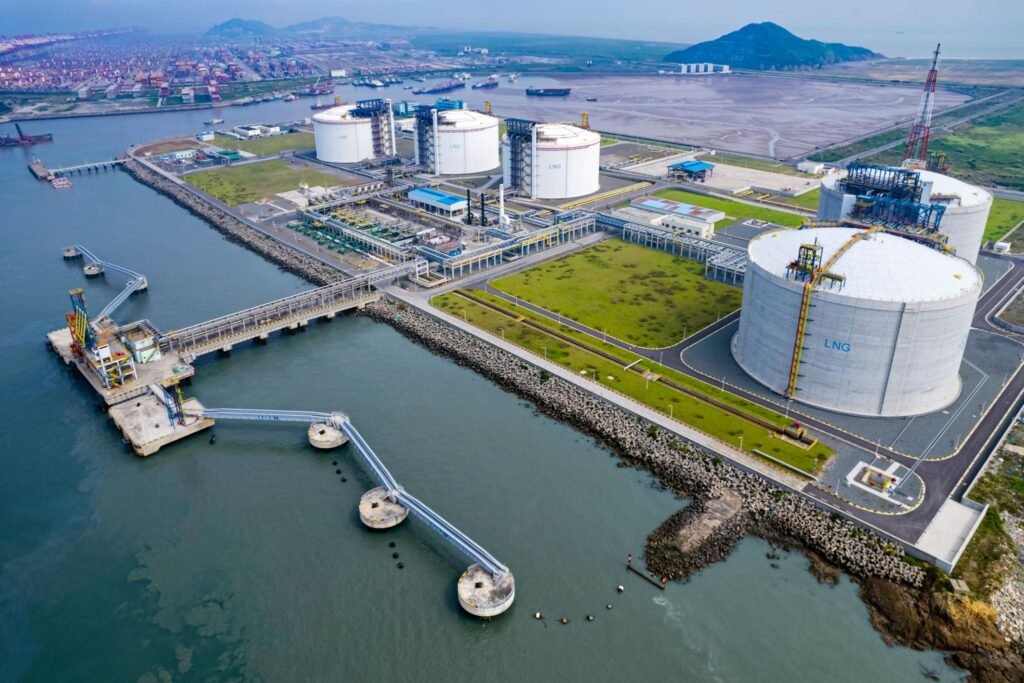
FAQ: LNG vs Natural Gas Prices, Uses and Global Market Differences
1. What is the main difference between natural gas and LNG?
Natural gas is a gaseous fossil fuel consisting primarily of methane. LNG is natural gas cooled to approximately -162°C, converting it into liquid form for easier storage and transportation.
2. Is LNG more expensive than natural gas?
LNG can be more expensive because its supply chain involves liquefaction, specialised shipping and regasification. However, the actual price depends on production costs, contract structures, transportation distances and market conditions.
3. Is LNG the same as natural gas?
Yes. LNG is natural gas in liquid form. The main difference is its physical state, which changes through the cooling process.
4. Why is natural gas converted into LNG?
Natural gas is converted into LNG to reduce its volume by approximately 600 times. This makes it easier to transport large quantities across oceans without constructing international underwater pipelines.
5. At what temperature does natural gas become LNG?
Natural gas is cooled to approximately -162°C at atmospheric pressure to become liquefied natural gas.
6. What are the main uses of LNG?
LNG is primarily used for electricity generation, industrial manufacturing, heating, fertiliser production and other applications requiring natural gas. It can also be used as a transportation fuel in certain sectors.
7. What determines natural gas prices globally?
Natural gas prices are influenced by production, consumption, storage inventories, weather conditions, transportation infrastructure, government policies, international trade and geopolitical developments.
8. Why do natural gas prices differ between countries?
Prices differ because countries have different production costs, import requirements, infrastructure, taxes, regulations, supply contracts and levels of competition between buyers and sellers.
9. What is Henry Hub in natural gas pricing?
Henry Hub is a major natural gas trading and delivery point in Louisiana, United States. It serves as the primary benchmark for US natural gas futures and influences several international LNG supply contracts.
10. What is the TTF natural gas benchmark?
The Title Transfer Facility (TTF) is a major European natural gas trading hub. Its prices are widely used as a reference for wholesale natural gas transactions in Europe.
11. What is JKM in the LNG market?
The Japan Korea Marker (JKM) is an important benchmark for spot LNG prices delivered to Northeast Asian markets, including Japan, South Korea, China and Taiwan.
12. What is the difference between Henry Hub, TTF and JKM?
Henry Hub primarily reflects US domestic natural gas conditions, TTF represents European wholesale gas prices, and JKM reflects the assessed value of spot LNG delivered to Northeast Asia.
13. What is spot LNG pricing?
Spot LNG pricing refers to the price of LNG cargoes purchased for relatively prompt delivery. It responds to current supply, demand, shipping availability and regional market conditions.
14. What are long-term LNG contracts?
Long-term LNG contracts are agreements between buyers and sellers to supply or purchase LNG over several years. They help establish predictable supply relationships and can support investment in LNG infrastructure.
15. What is oil-indexed LNG pricing?
Oil-indexed LNG pricing is a contractual mechanism that links the price of natural gas or LNG to a crude oil benchmark, often using an agreed pricing formula.
16. What is gas-on-gas pricing?
Gas-on-gas pricing is a pricing mechanism in which natural gas prices are primarily determined by competition between gas buyers and sellers rather than being directly linked to oil prices.
17. Which countries are the largest LNG exporters?
The United States, Qatar and Australia are among the world’s leading LNG exporters. Other significant suppliers include Malaysia, Russia, Nigeria and Oman.
18. Which countries import the most LNG?
Major LNG importing markets include China, Japan, South Korea and several European economies. India is also an important LNG importer.
19. Why is LNG important for Europe?
LNG allows European countries to diversify their natural gas supplies, reduce dependence on particular pipeline suppliers and access gas from international exporters.
20. Why does Asia have significant LNG demand?
Asian economies require natural gas for electricity generation, industrial production, residential consumption and energy security. Limited domestic gas production in some countries increases their reliance on LNG imports.
21. How does China influence global LNG prices?
China is a major natural gas consumer and LNG importer. Changes in its industrial activity, domestic gas production and import demand can influence competition for available LNG cargoes and international spot prices.
22. How does Qatar influence the global LNG market?
Qatar is a major LNG producer and exporter. Its production capacity, export infrastructure and shipping routes make it an important supplier to Asian and European energy markets.
23. What are LNG liquefaction costs?
Liquefaction costs are the expenses associated with processing and cooling natural gas into liquid form. They include plant construction, equipment, energy consumption, maintenance and operating expenses.
24. What are LNG shipping costs?
LNG shipping costs are expenses associated with transporting liquefied natural gas using specialised carriers. They depend on distance, vessel availability, charter rates, fuel costs, insurance and shipping routes.
25. What is LNG regasification?
Regasification is the process of warming LNG to convert it from liquid form back into gaseous natural gas before distribution through pipelines or other infrastructure.
26. Is pipeline gas cheaper than LNG?
Pipeline gas can be cheaper when producers and consumers are geographically connected and transportation infrastructure is available. LNG may be more expensive because of liquefaction, shipping and regasification expenses. Actual costs depend on the specific supply route and market conditions.
27. How do geopolitical events affect LNG prices?
Geopolitical conflicts, sanctions, export restrictions and shipping disruptions can reduce available supplies, increase transportation expenses and create uncertainty, resulting in higher prices and market volatility.
28. How does weather influence natural gas prices?
Cold weather increases heating demand, while hot weather can increase electricity consumption for air conditioning. Both conditions can increase natural gas demand and influence prices.
29. What is the future of the global LNG market?
The global LNG market is expected to evolve through new export capacity, growing demand in emerging economies, changing trade relationships and increased competition between regional buyers. Environmental regulations and renewable energy development will also influence its long-term outlook.
30. Will LNG replace natural gas in the future?
No. LNG is simply a transportation and storage form of natural gas, not an alternative fuel. Both forms will continue to serve different parts of the natural gas supply chain.
Also Read: Why Do Gold Prices Rise and Fall in Global Markets
